自己紹介・研究目的
令和8年10月入学/ ■SPRING事業 採択学生紹介

認知・情動脳科学プログラム
令和8年10月 大学院入学
BATMUNKH BAASANSUREN
バトムンフ バーサンスレン
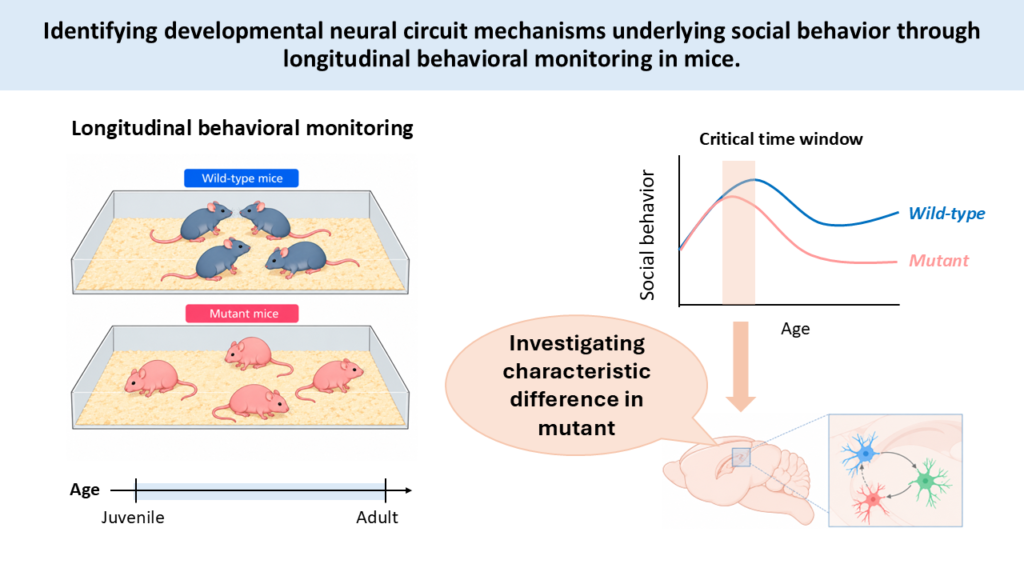
Identifying developmental neural circuit mechanisms underlying social behavior through longitudinal behavioral monitoring in mice.
I am Baasansuren Batmunkh from the department of System Emotional Science, Graduate School of Pharma-Medical Sciences, University of Toyama.
Social behavior is fundamental to survival, longevity and well-being, and impairments in social interaction are core features of neurodevelopmental disorders, such as autism spectrum disorder. Recent animal studies using advanced techniques have begun to identify neural circuits that regulate social behavior. However, many of these studies have focused on the adult brain, leaving open the question of how these circuits are formed during development. This developmental perspective is particularly important because many ASD-associated genes are involved in synapse formation, maturation, and function.
In this study, combining longitudinal behavioral analysis and genetically modified mice, we will investigate developmental neural circuit mechanisms underlying social behavior through longitudinal behavioral monitoring in mice.